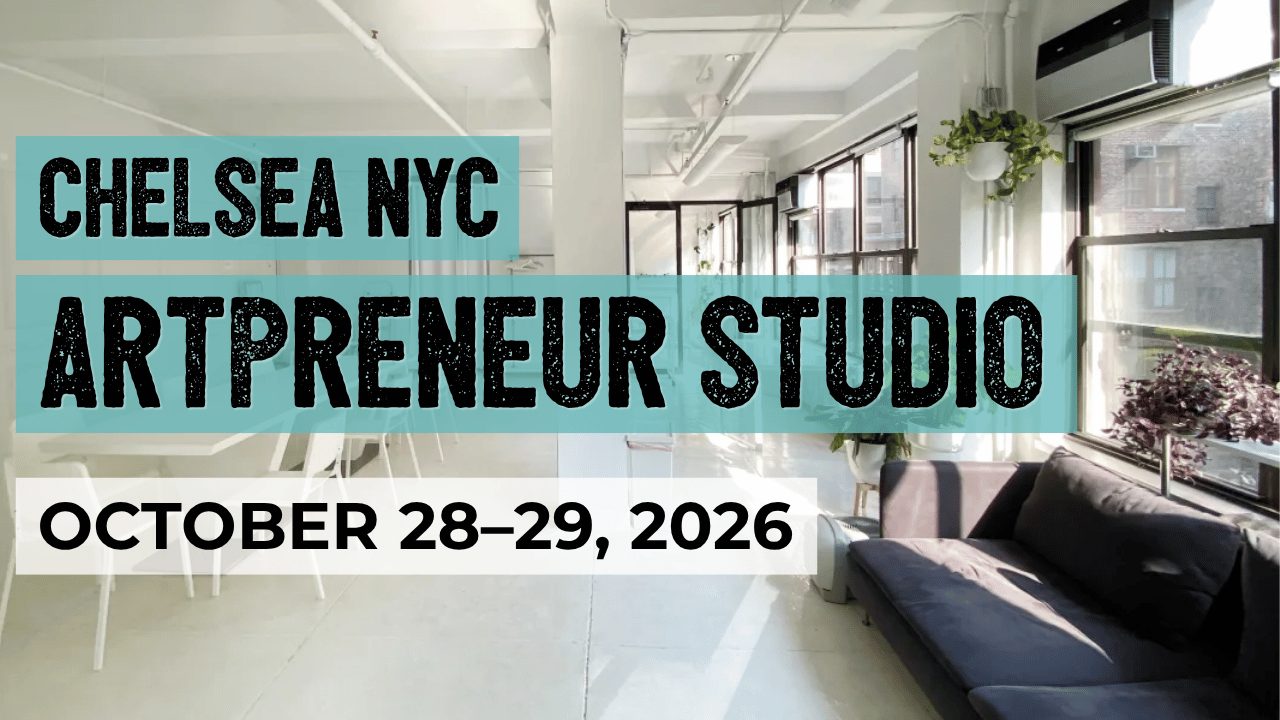
An art business that finally sells the way you always believed it could.
October 28–29, 2026
A think tank for established artists. If you know the art business you want but you can't see the route from here to there — that's exactly what these two days are for.
Apply now
Applications reviewed personally · Response within two business days
You can't see the forest through the trees
You know exactly what you want. Sold out of originals with people waiting on the next piece. Collectors who reach out to you instead of the other way around. Work that's valued highly in a field that feels crowded. Income that doesn't depend on being at a show every single weekend.
That's not the part you're missing. You've been able to see it for years.
What you can't see, from where you're standing, is the route.
And that isn't a shortcoming. You're too close to everything. From inside your own business you can only see the next few feet, and every direction looks equally plausible from there.
There's also more information available than any working artist can sort through, which is its own trap — you don't need more of it, you need to know which levers actually move your business. And every answer you do find produces the next question.
So the decision doesn't get made. It gets deferred, revisited, and deferred again. Another season goes by and the prices are the same, the collection hasn't launched, and the gallery conversation still hasn't happened. Not because you're avoiding it — because from where you're standing there's no way to know which choice is right, and guessing wrong is expensive.
I've taught this material every way there is to teach it — courses, coaching, a bestselling book with HarperCollins, a podcast with millions of downloads. None of it can do the one thing that would actually help: look at your numbers, your work, and your market, and tell you which way to go.
That takes a focused room, two days, and someone who's been up before.
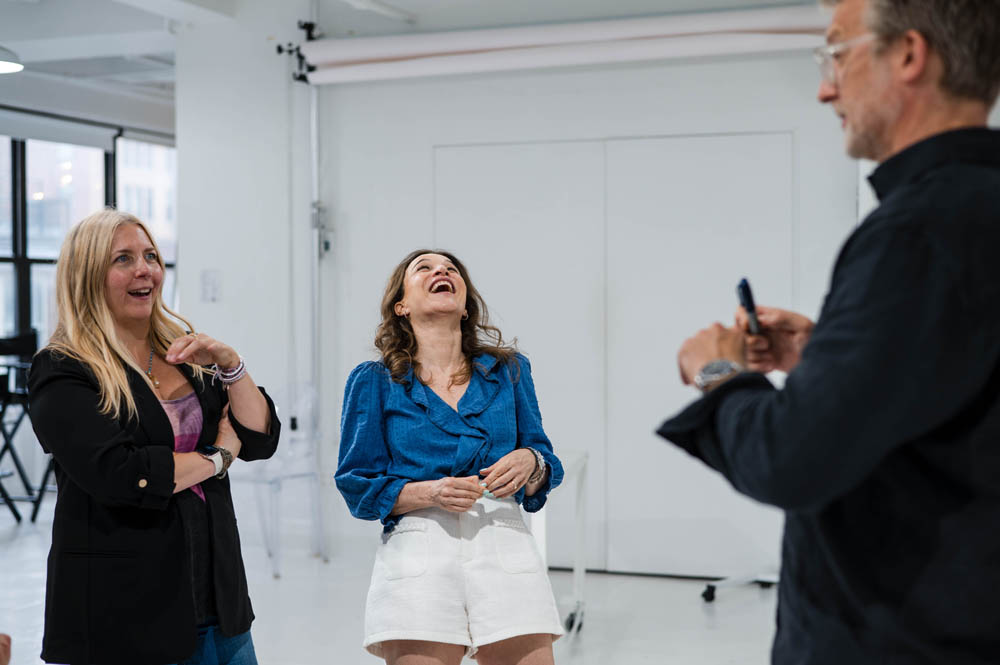
No slides. No breakout rooms. No worksheets you'll never open again.
The problem that's costing you sales
You come with one problem. Not the kind you could get solved in a Facebook group — the one that's been holding you back.
None of these get solved with a better Instagram strategy. They're structural, they're expensive to get wrong, and they're the ones you've been carrying alone — because there's nobody around you qualified to weigh in. Your partner can't. Your artist friends are guessing. The internet gives you the average answer to a situation that isn't average.
The smaller things get handled too — the booth conversation, the follow-up email, the website copy. But those aren't why you'd come.
Bring your problem. Leave with the solution.
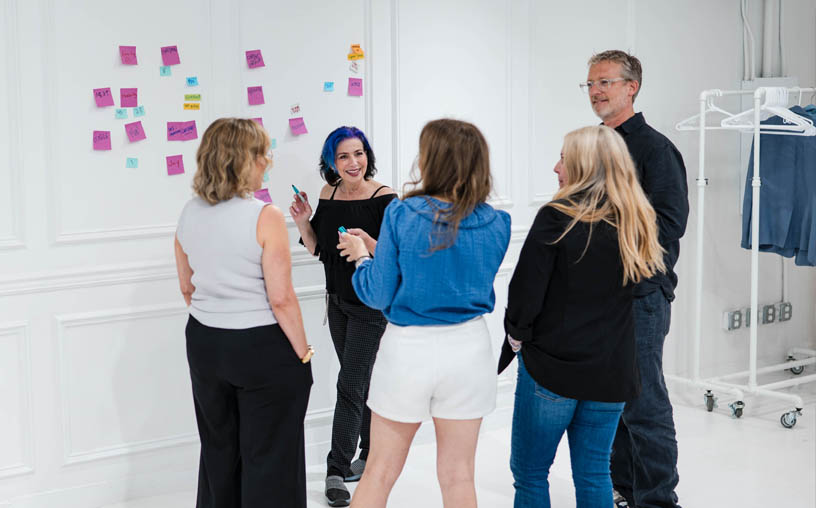
We start with the problem you brought. But problems in an art business are rarely isolated — pricing touches positioning, positioning touches which collectors are yours, which touches where you should be showing. Pull one thread and the others move.
So what you leave with depends on your business. For most artists it looks something like this:
- The problem you came with, solved. The one you named in your application — and the two underneath it you hadn't named yet.
- Your new pricing, set. Actual numbers for originals, prints, and commissions — run against your inventory and your market, with a plan for the collectors who bought at the old price.
- A strategy for reaching the right collectors. Not more followers — your superfans. The specific people who buy work like yours, where they are, and how you get in front of them.
- Your gallery and opportunity strategy. Which to pursue, which to leave, which were never a fit, and what your submission needs to look like.
- A follow-up system you'll actually use. For everyone who said your work was gorgeous and then disappeared.
- The path to the business you actually want. Sequenced, so you know what to focus on first and what to do next. Which levers matter and which ones you can stop pulling. Not a wish list.
- Professional portraits from a proper studio shoot on Day Two, delivered within a week.
You'll leave knowing exactly what to do and how to do it. Some people build things in the room; others would rather think it through here and execute at home. Either way you leave with the answer, not another list of things to figure out.
Collectors can't buy what you haven't clearly offered. Most of this work is just making the offer clear.
Greg Malphurs · Joshua Tree, CA
This is what happens when artists stop guessing
Amber has already claimed a seat in this room. She sold $29,800 in thirty days. That's the kind of artist you'll be sitting next to.
"At the beginning, I did an art audit, and it stung my little heart because you looked at my art and said, 'Stop doing this. Do more of this.' I switched to doing more of my figurative art and I have not looked back."
Nesha Cornett · Charlotte, NC
"My client said, 'We've got another office we're building out.' And, channeling my Miriam, I said, 'My prices have gone up quite a bit.' She came back and said, 'I think we have enough cushion in the budget, and you're worth it.'"
Jay Handy · Madison, WI
After nearly quitting. "Before I joined, I was completely burned out and worried about how I was going to pay rent if my next show didn't go well."
Bo Sapphire · Los Angeles, CA
Then over $20,000 sold in two months. "That's the most money I have ever made with my art."
Paula Christen · Winthrop, WA
"There's power in being able to share focused time together with other artists and to be able to slow down to think about being an artpreneur."
Grace Marquez · Toronto, ON
"Attending Miriam's NYC mastermind event was one of the greatest experiences as an artist and human being. The insight and coaching that I received has boosted my confidence in building and sustaining a successful art business. Being around other like minded and talented artists also made me feel right at home."
Kamille Adell · Middletown, NY
"There was no feel of 'hierarchy' to the group. Instead, there were experts there to guide us and offer insights, but I never felt in any way lacking or less than. It was a collegial and nurturing experience that helped me on both practical and emotional levels."
Edward Ficklin · New York City, NY
"Having the proximity to Miriam to ask her feedback about different concerns in my art career and getting the answers right away puts growing on Fast Forward. Bringing a group of like minded people together to talk about their art journey was powerful."
Annick Duvivier · Miami, FL
More case studies at schulmanart.com/case-studies. Individual results vary — see earnings disclaimer.
About Miriam Schulman
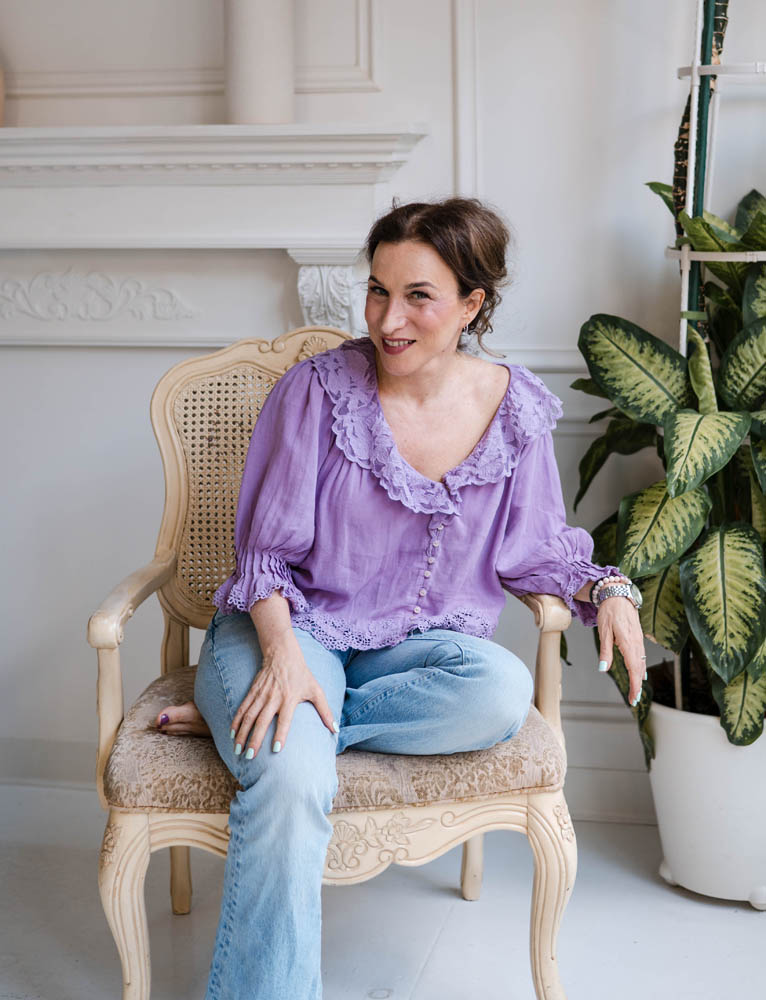
I took the practical route first. Finance. Good money, no purpose. Then 9/11 happened three blocks from my office and I knew I wasn't going back.
I've made my living as an artist ever since — twenty-five years of it, with work sold around the world, in New York museum gift shops, and on NBC's Parenthood and Amazon's Hunters.
The thing that changed everything came from an unlikely place. After I quit, I taught Pilates on the side, and the gym trained me to sell personal training packages. That's where it clicked: the psychology behind why someone buys something they don't strictly need is the same psychology that makes a collector buy a painting.
That's the work I've done ever since. Why collectors buy — what's actually happening when someone commits real money to an object nobody needs, on a decision that has nothing to do with a spreadsheet. And how artists talk about their work so the right person feels found instead of sold to.
Most artists describe what they made. Collectors buy what it means.
Since 2019 I've coached hundreds of artists using exactly this. Artpreneur is my bestselling book with HarperCollins. The Inspiration Place has millions of downloads. My work and my story have been in the New York Times, Forbes, and Entrepreneur.
But the part that matters for these two days is simpler: I'm a working artist who sells her own work. Everything I'll tell you in that room is something I've had to do myself, and that has worked for the artists I coach.
This experience is for you if
- You're already selling. You have work in the world, collectors who've bought, and momentum you built yourself.
- You're at the point where the next level requires decisions you keep deferring — raising prices, launching the collection, approaching the gallery, finally emailing the list.
- You want the answer to your problem. You've already read the general one, and it didn't fit.
- You're willing to be told something you don't want to hear, and then do it anyway.
- You'd rather leave with advice built for your business than forty new ideas that don't apply to you.
- You can see three or four directions you could take this, and you want someone qualified to tell you which one makes sense.
Don't apply if
- You're just getting started and haven't sold work yet. Come back — but not yet.
- You want to stay quiet the whole time. Listening while someone else gets worked on is genuinely valuable here — most of their problems are also yours — but the room only works if you also put your own situation on the table.
- You want inspiration, encouragement, or a general pep talk. That's not what these two days are.
- You want someone to validate a decision you've already made. I'll tell you what I actually think.
Why seven seats changes everything
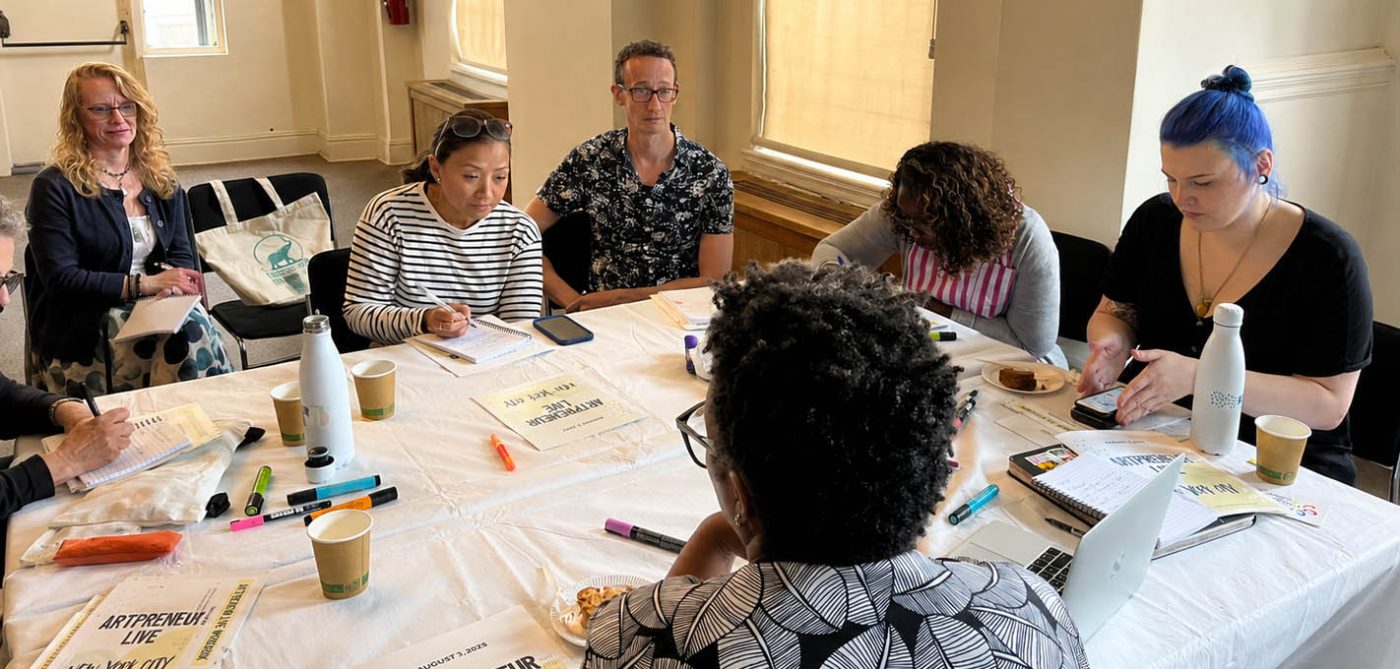
Everyone gets real time on their own business.
Two days holds only so many hours. The fewer people in the room, the more of them belong to you — so your situation gets worked on properly, more than once. You're not watching someone else get coached and quietly hoping your turn comes.
It's consulting, not curriculum.
There's no fixed agenda, because I build the two days around the problems you all bring in your applications. I've never run the same two days twice.
You leave with the answer, not the assignment.
We don't stop at "here's what you should do when you get home." We decide the thing, map the steps, and if you want to build it right there, we build it right there.
Chelsea is not decoration.
It's the right place to do serious art-business work. You're surrounded by galleries doing at scale exactly what you're trying to do — which changes what feels normal to ask for, and what feels normal to charge.
The room is chosen, not filled.
Everyone in it is running a real business at a real level. The artist next to you has probably already solved the thing you're stuck on — and will tell you how over lunch.
How the studio unfolds
Salon style, the way I do it with friends. Wine, falafel, hummus, music in the background, and the group around an oval table. Dinner is included, so you don't have to sort out a restaurant in a city you don't live in.
This is also where we do the Oracle cards. Optional, but the room that meets the night before starts Wednesday at full speed instead of warming up. Address shared after enrollment.
We put every artist's situation on the table, find the real bottleneck, and start building.
We finish early enough that the evening is genuinely yours. Some people work. You're two blocks from the High Line and a short walk from the Whitney, which is open until six.
Building and refining. You'll be pulled for your portrait session at some point during the day. We close by mapping the path to the business you came here wanting.
Coffee, refreshments, and lunch included.
An intimate conversation about how interior designers source art, evaluate artists, and build lasting creative partnerships.
Included. The Robert sits on top of the Museum of Arts and Design at Columbus Circle, with Central Park out the windows. The whole room, no agenda. Some of the best conversations of the two days happen here.
Industry access
Lunch & Learn with Rachel Raterman
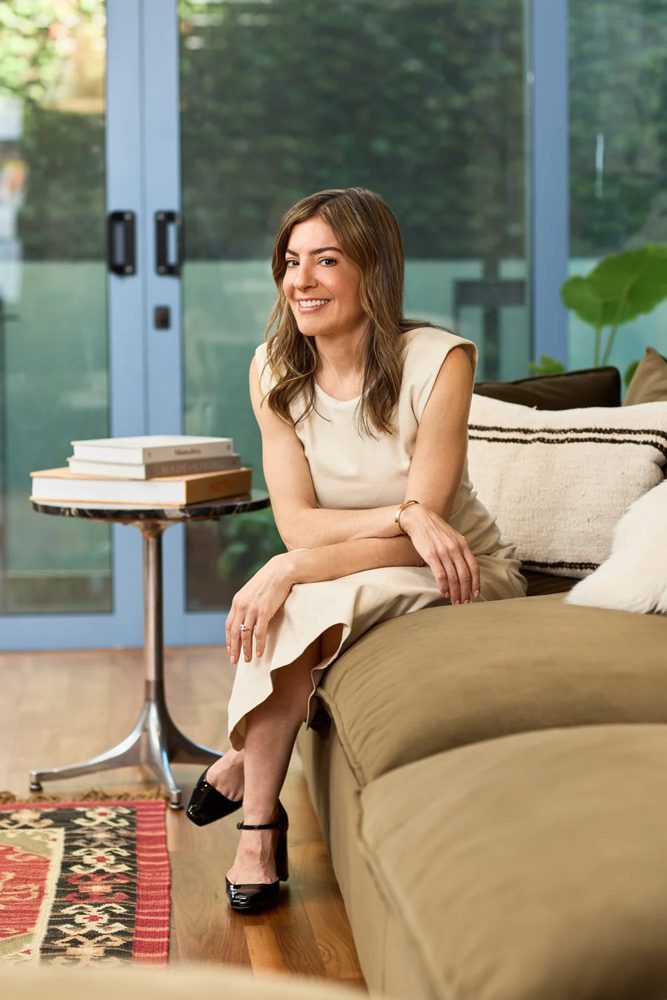
On Thursday, Rachel Raterman, founder and principal of Lark Design Studios, will join us in the Chelsea studio for lunch and a candid conversation about how interior designers discover, evaluate, and select artwork.
Rachel brings more than 15 years of experience designing highly detailed hospitality, restaurant, retail, and residential spaces. Before founding Lark, she held senior roles at firms including Roman and Williams, Rockwell Group, and Starbucks Asia Pacific.
You'll have the opportunity to ask questions, understand what designers look for when working with artists, and begin building the kind of genuine industry relationship that rarely happens through a cold email or online submission.
The intimate lunch setting gives you direct access to Rachel's perspective, the chance to ask questions about your own work, and a valuable connection to the professional design world.
A branding portrait shoot in a well-lit Chelsea studio

Day Two, a photographer joins us in the studio.
This is a proper branding shoot in a well-lit space: headshots, working portraits, images that look like a professional artist runs a professional business. Your edited gallery arrives within a week, with full rights to use the images however you want — website, press, gallery submissions, social, media kit.
Most artists are working with a selfie they took themselves in 2016. It isn't costing you eyeballs — it's costing you sales. The work looks less valuable when the person who made it looks like an amateur, and collectors decide what you're worth in about four seconds.
The photographer comes on Day Two, not Day One, for a simple reason: nobody works well with a camera in the room on the first morning. By Thursday you've forgotten to be self-conscious.
You're the average of the five people you spend the most time with
Jim Rohn said it, and every artist who's ever been in a good room knows it's true. For two days, you're surrounded by other working artists running real businesses at your level.
Hand selected from applications. This isn't networking — nobody's collecting cards. It's a room small enough that everyone knows what everyone else is working on by lunch on the first day.
The room matters because serious artists make different decisions when they're surrounded by other professional artists. What you think is an outrageous price stops sounding outrageous when the person across the table charges it. What you've been calling ambitious starts to sound like a reasonable Tuesday.
Almost everyone arrives knowing no one. That's by design, and it doesn't survive Tuesday's dinner.
The collaborations, referrals, and honest advice that come out of these rooms tend to outlast the two days by years.
How we get to the real answer faster
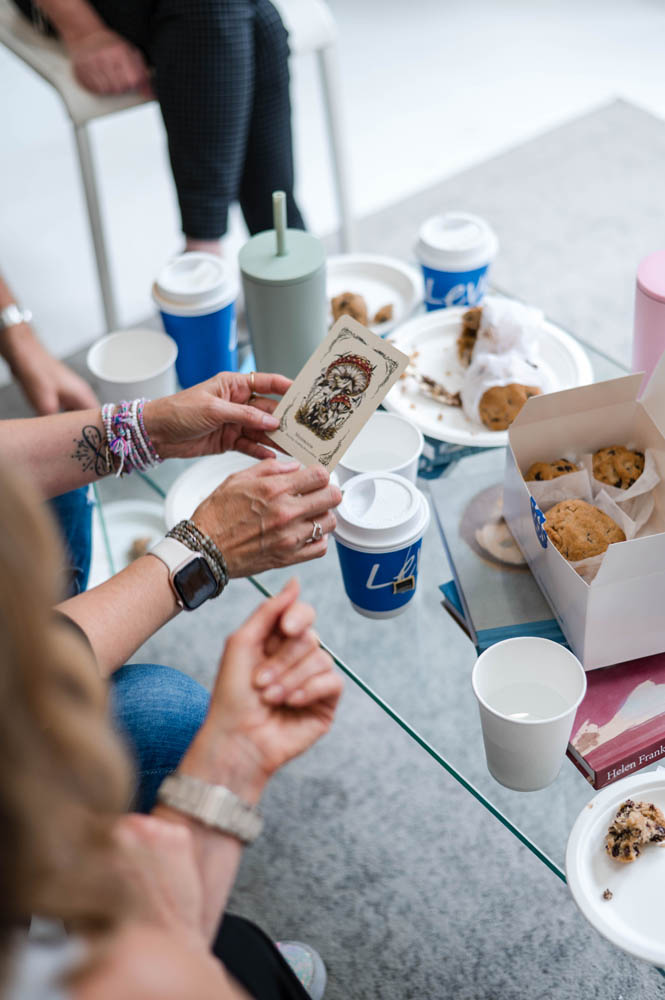
We pull Oracle cards on Tuesday night, around the table, music in the background.
They aren't fortune telling and I'm not predicting anything. A card puts an image in front of you, and images get past the part of your brain that's been arguing with itself. You look at one, something surfaces, and you say a truer thing than you would have said in a business conversation.
That's the whole trick. The imagination gets you somewhere logic has been circling. Then Wednesday morning we go to work on what actually came up.
If it's not your thing, pour another glass and watch. Nobody's checking.
Investment
IncludedTwo full days in the studio · Professional portrait session with full usage rights · Coffee, refreshments, and lunch both days · Tuesday welcome dinner at my home · Thursday group dinner
Not includedAirfare, hotel, ground transportation, and alcohol.
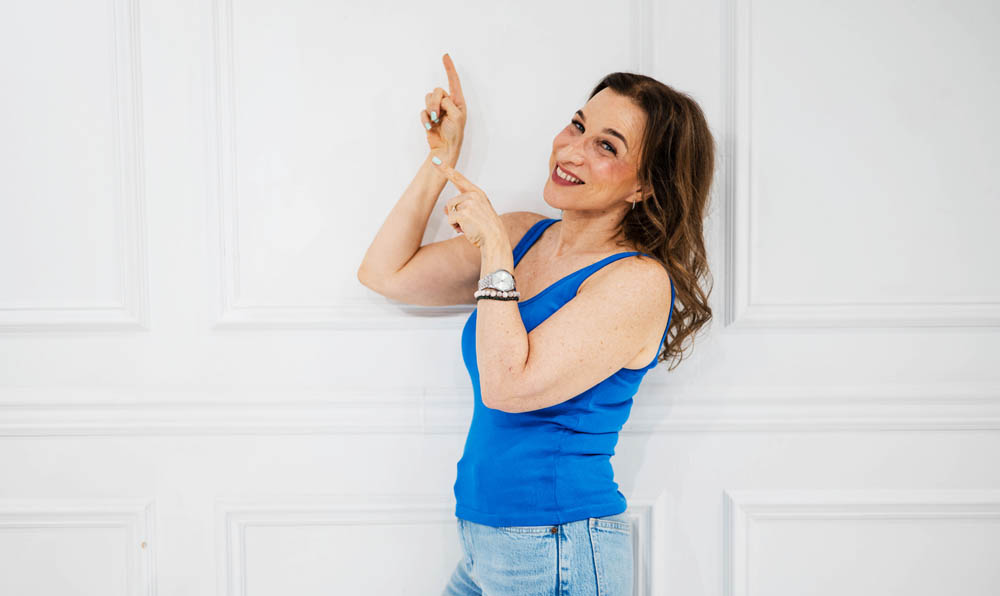
Want to talk it through first?
If you're seriously considering the Chelsea Artpreneur Studio but want to make sure it's the right fit, book a private consultation with me.
Bring your questions. We'll talk about where your art business is now, what you want help with, and whether the Chelsea experience is the right next step for you.
Three steps
- You apply.
The application asks what you're working on and what problem you'd bring to the room. I read every one myself. Don't rush it — give yourself the hour to actually think about what you want your art business to look like. Most artists never sit down and do that, and it's worth doing whether or not you end up in the room.
- You hear back within two business days.
Approved or not, you'll know either way.
- You have 72 hours to secure your seat.
After that it opens to the next applicant.
Frequently asked
How do I apply?
Start your application here → It takes about five minutes. I read every one myself.
You'll hear back within two business days either way. If you're accepted, you'll have 72 hours to secure your seat before it goes to the next applicant.
Will I really walk away with enough value to justify the investment?
$4K is a serious investment. It should be.
So the real question isn't, “Can I make this back from one sale?”
Maybe you can. One better-priced piece, one stronger commission, one corporate project, one gallery conversation, one collector follow-up sequence, or one email campaign that finally converts could cover the investment.
But that's still the smallest way to think about it.
A better pricing strategy affects every piece you sell from here forward. Clearer collector messaging changes how people understand the value of your work. A stronger website can stop quietly leaking opportunities. A more intentional outreach plan can put your art in front of better-fit buyers, designers, galleries, curators, or collectors. And knowing which opportunities are actually worth your energy can save you months of chasing the wrong things.
You're not coming to New York for a to-do list. You're coming to make the decisions, build the assets, and sharpen the strategy that helps the next year of your art business work harder than the last one.
Individual results vary. See earnings disclaimer.
What kind of results do artists get working with you?
Here's what happens when artists at your level finally get strategy instead of more information.
Cheryl Shanahan made more in six months than she made in all of the previous year. Sangeetha was selling roughly one piece a year at low prices before we worked together. Cheryl Russell came in playing small and started aiming at the galleries and cities that actually fit her work.
None of that came from working harder. It came from someone looking at the whole picture and saying do this, not that.
What I'm compressing into these two days is the level of attention my Inner Circle clients get across a year. Same eyes, same directness, same willingness to tell you the thing nobody else will — concentrated into forty-eight hours in one room.
Individual results vary. See earnings disclaimer.
Do I need to be at a certain revenue level?
There's no hard number. What matters is that you're already selling — you have collectors, you've priced work, you know what moves and what doesn't. That's the raw material we work with.
If you haven't sold yet, this isn't the right room and I'll tell you so rather than take your money. Start with the Artist Incubator and come to Chelsea in a year or two.
Who else will be in the room?
A small group of artists running real businesses, chosen from applications — which is exactly why the application matters. I'm reading for range as much as for level, so you're not sitting with several versions of yourself.
Amber's already in. She sold $29,800 in thirty days.
How many problems can I bring?
One. The one that, if solved, makes several other things easier or unnecessary.
You'll get help with more than one — that's what happens in a room this size. But name your real bottleneck in the application, and be specific about it. Vague problems get vague answers.
I'm coming alone. Will I feel out of place?
Almost everyone arrives knowing nobody, which is exactly why dinner is Tuesday night. Come in early enough to be at my table that evening and you'll start Wednesday already knowing the room — no walking into a space full of strangers, no first-morning small talk.
I'll say the other part plainly: I built this as an introvert, for introverts. Big conferences flatten me. A small group around a table with music on is where I come alive, and I designed these two days to do that for you too.
Will sessions be recorded?
No. Nobody performs for a camera, and nobody wonders whether the real numbers they just said out loud will resurface somewhere later.
You'll leave with your own notes and a plan — not a library of recordings you'll promise yourself you'll watch.
What happens after the two days?
You leave with your problem solved, your pricing set, and the route mapped for the year ahead. The Studio stands on its own — you don't need to join anything else for it to be worth it.
There's no ongoing coaching included afterward. What continues is the plan you leave with, the decisions you made, and a handful of artists who now know your business well enough to be useful.
What happens after I'm accepted?
You'll get an acceptance email with instructions for confirming your seat. You'll have 72 hours.
Once confirmed, you'll receive a preparation guide, travel and hotel recommendations, portrait session details, a dietary restrictions form, and final studio details closer to the date.
What should I bring?
A notebook, and your actual numbers — what you charge, what's sold, what hasn't, roughly how big your list is. Approximate is fine.
A laptop is welcome but not required. Some people want to build things on the spot; others would rather think, talk, and take notes for two days and do the building at home. Both work.
You don't need to arrive organized. That would rather defeat the point.
What should I wear?
The weather. Late October in New York runs about 60°F in the afternoon and drops to the high 40s after dark. Bring a real coat, layers you can peel off in a warm studio, and shoes you can walk twenty blocks in — because you will. Expect at least one day of rain.
In the studio. Whatever you can think in for six hours. Nobody's dressing up.
For the portrait session on Day Two. Bring something you'd actually want on your website for the next three years. Solid colors and simple shapes photograph better than busy patterns. If you're not sure, bring two options and we'll decide in the room.
For dinner. Both dinners are relaxed. Tuesday is at my home — come as you are. Thursday we're at a restaurant, so bring one outfit you'd wear to a nice dinner in the city. Nothing formal, but New York dresses up a little in the evening.
Are travel and hotel included?
No. Your investment covers the two-day Studio, the portrait session, coffee, refreshments and lunch both days, Tuesday's welcome dinner, and Thursday's group dinner. Airfare, hotel, and transportation are yours.
Hotel recommendations and airport guidance are in the travel section below.
Can you accommodate dietary restrictions?
Yes, in most cases. After enrollment you'll be asked about allergies and restrictions. We can reliably handle vegetarian, vegan, gluten-free, and dairy-free. For severe allergies, tell us as early as possible so we can confirm what can be safely arranged.
Is the studio accessible?
There's an elevator from the ground floor, so getting to the studio is straightforward. The bathroom, however, is not wheelchair accessible — I'd rather tell you that now than have you discover it on Day One.
If you have mobility, sensory, or other accommodation needs, email me before you enroll and I'll walk you through the specifics of the space so you can decide whether it works for you.
What's the cancellation policy?
With a group this small, a cancellation isn't an empty chair — it changes the room. So the closer we get, the harder it is to refill. The schedule works like a hotel:
| If you cancel | Refund |
|---|---|
| On or before September 4 More than 8 weeks out | Full refund, less a $500 non-refundable deposit |
| September 5 – September 30 4–8 weeks out | 50% refund |
| October 1 or later Within 4 weeks | No refund |
Transferring your seat. Up to September 30, you can transfer your seat to another artist, subject to my approval — they still have to be right for the room. After that, seats can't be transferred.
If you need to move to a future Studio, ask. If I'm running another one and there's space, I'll do my best. It isn't guaranteed and it's at my discretion.
If I cancel for any reason, you get a full refund. I'm not responsible for your airfare or hotel — which is why I keep saying: get travel insurance. A policy costs a fraction of your airfare and covers the reasons people actually miss things. Buy it when you book.
Travel & logistics
Plan to arrive Tuesday, October 27. Welcome dinner is that evening, 6:00 to 9:00, at my home — salon style, wine, music, an oval table, and Oracle cards. Dinner's included, so you don't need to make other plans. Aim to land early enough in the afternoon that you're not rushing.
Don't fly out Thursday night. The group dinner starts at 7:00 PM and runs late, and you don't want to be watching the clock. Book Friday morning or later — or stay the weekend, since you're already in New York.
Where to stay
Because this experience is intentionally small, I'm not holding a hotel block. Instead I've picked three Chelsea hotels at three price points. New York rates move constantly, and October is a busy month — book early.
Chelsea Savoy Hotel
Straightforward, comfortable, right in the middle of Chelsea. Choose this if you'd rather spend your budget enjoying New York than on a room you'll barely be in.
Moxy NYC Chelsea
Modern and playful, with beautiful communal spaces and real New York energy. Rooms are deliberately compact, so this is the pick if you care more about atmosphere than square footage.
The Hotel Chelsea
For anyone who wants the hotel to be part of the experience. Woven into New York's artistic history and the most atmospheric of the three by a wide margin.
Getting to Chelsea
Fly into any of New York's three major airports: JFK, LaGuardia (LGA), or Newark (EWR). Yes, Newark is in New Jersey. It's still a completely normal and convenient way to get to Manhattan.
My advice: pick your flight on schedule and price, not on which airport. New Yorkers use all three. All three have taxis and rideshare. If you'd rather take transit:
- From JFK — AirTrain to Jamaica Station, then subway or Long Island Rail Road into Manhattan. MTA guide →
- From LaGuardia — No train station, but the free Q70 LaGuardia Link bus connects to several subway lines. MTA guide →
- From Newark — AirTrain to Newark Airport Rail Station, then NJ TRANSIT straight to Penn Station, just north of Chelsea. NJ TRANSIT guide →
While you're here
We finish at 4:00 both days, which leaves you real evenings.
- The Whitney is a short walk from the studio and open until 6:00 PM Wednesday. Last entry is an hour before close, so a 4:00 finish gets you in comfortably.
- The High Line starts two blocks away and is lit until 10:00 PM. Best at dusk.
- Chelsea galleries are concentrated in the twenties between 10th and 11th Avenues. Most close by 6:00 PM.
- Wednesday evening is a quiet night for museums citywide. Good night for dinner in the West Village, a show, or the High Line.

The art business you want is not going to arrive on its own
You've had the dream for years. That was never the problem.
What you don't have is someone who's been where you're going, two uninterrupted days, and six serious artists who take this as seriously as you do.
You can spend years trying to figure this out yourself. Or you can spend two days in October and stop guessing.
Apply nowSpace is limited · I read every application myself